Brattleboro: A Traditional Town That Escaped Suburban Development
This Small Town Is Surprisingly Urban
2023 Strongest Town Contest Winner
Learn more about Brattleboro's recognition from Strong Towns.
Origins & Geographic Context
The Abenaki people originally named this place Wantastegok, meaning "place of the Lost River," and this name captures something essential about Brattleboro's character. Located near Vermont's first permanent European settlement, Brattleboro developed and matured more than a century before what we now call "the suburban experiment."
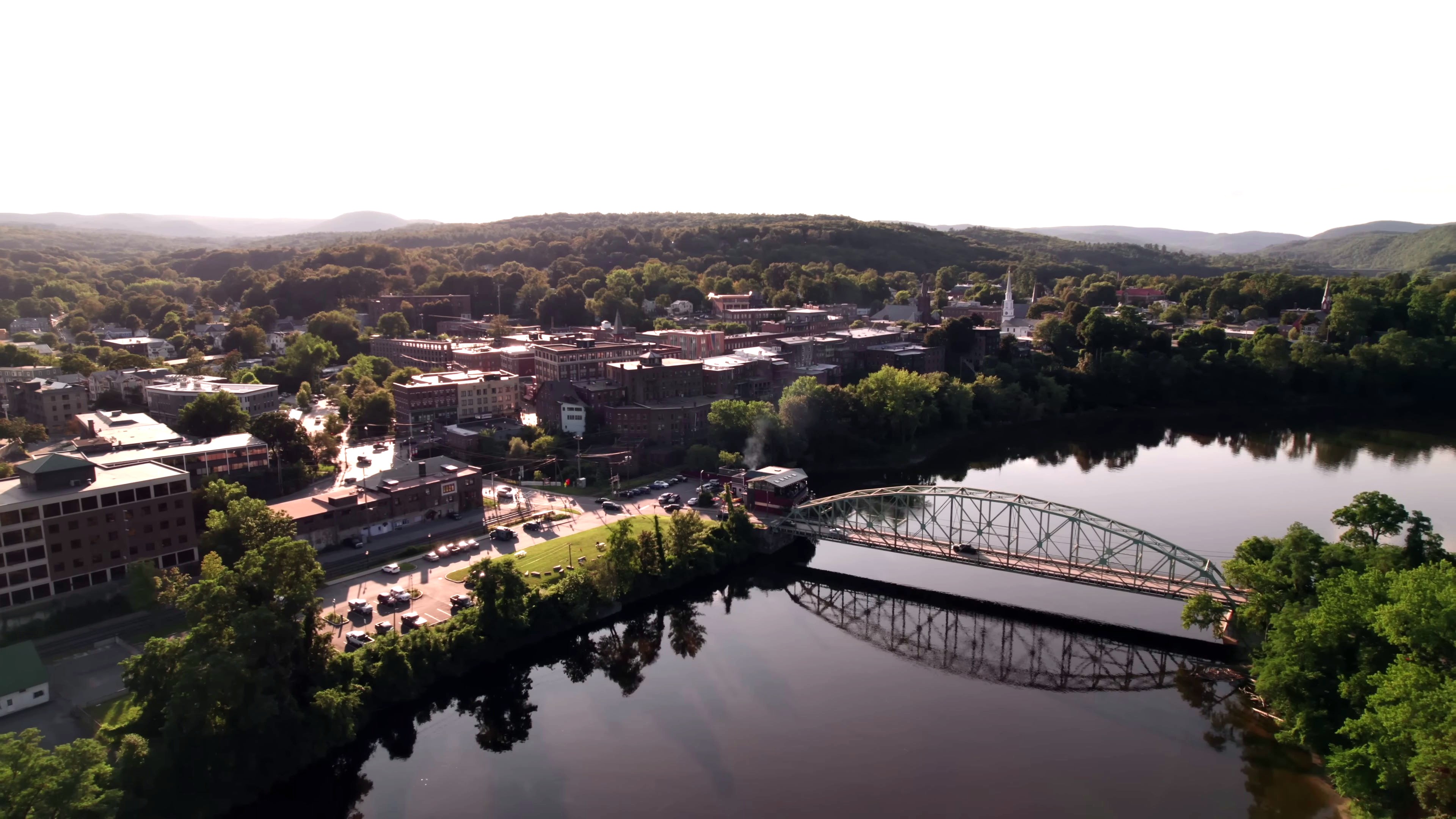
Aerial view of downtown Brattleboro showing the compact, traditional development pattern [Source: Strong Towns]
The town's unique geography has been both a blessing and a defining constraint. Hills to the west and Mount Wantastiquet on the New Hampshire border make it difficult and expensive to build typical American suburbs on the surrounding land. As one resident explains: "We're pretty hilly and so as far as like actual good places to develop it's hard to find and then places that aren't yet developed are really hard to find."
Historic Development Pattern
- 18th and 19th Century Core: Traditional town center within the curve of the interstate
- West Village: Development along Route 9, the main east-west highway
- Limited Suburban Areas: A few suburban developments off Route 9
- Rural Preservation: The rest remains mostly farms and forest land
This geographic constraint has preserved a development pattern that feels increasingly rare in North America—a true balance between urban amenities and rural access without suburban sprawl dominating the landscape.
Traditional Built Form Advantages
Unlike new planned communities, Brattleboro's strength comes from its traditional built form that has evolved over centuries. The downtown consists of "a concentrated 3 to four blocks" nestled between the Connecticut River and West River, creating a compact urban core that contains everything residents need.
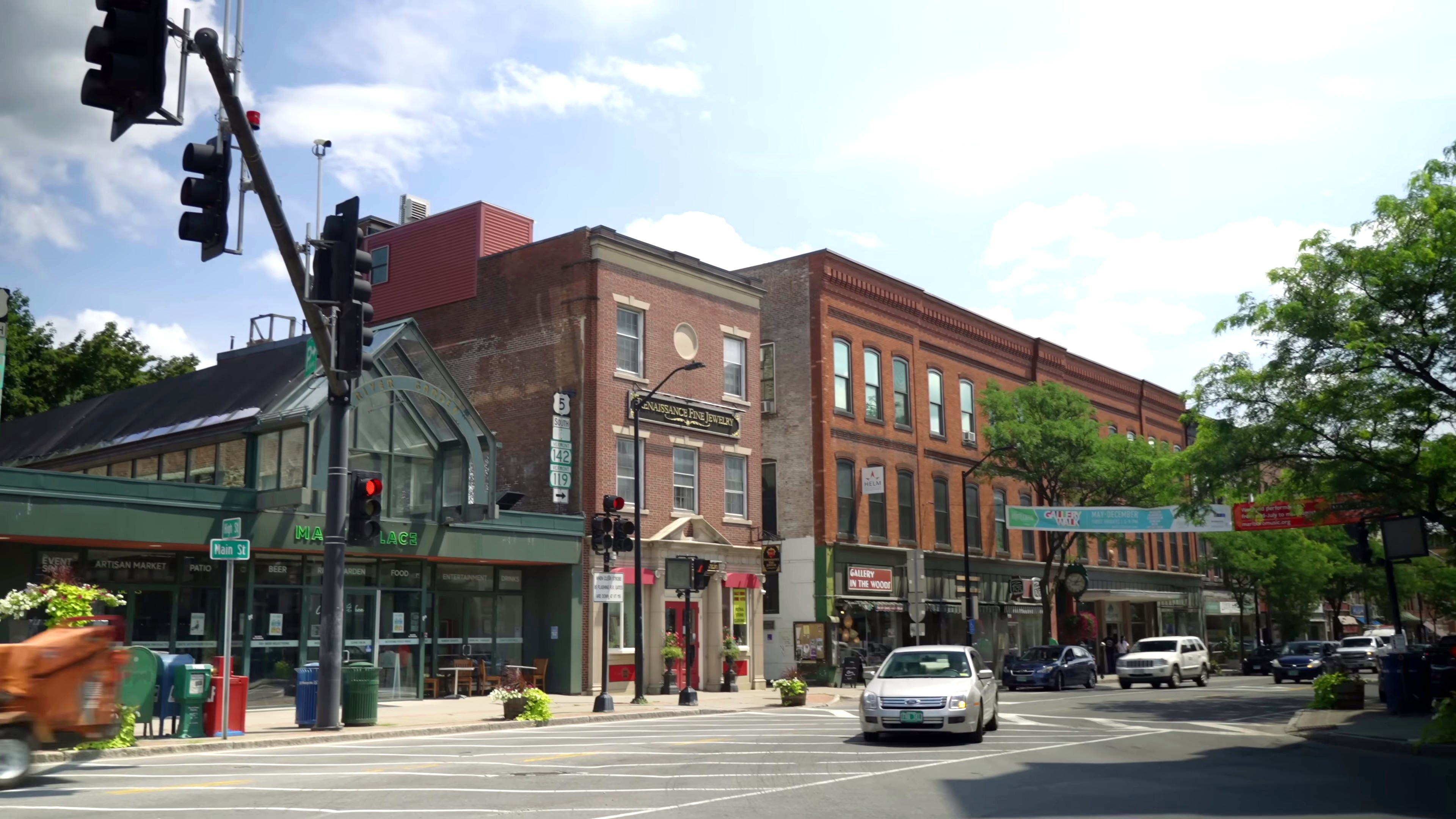
Traditional brick buildings create a human-scaled downtown environment [Source: Strong Towns]
Key Design Features
- Mixed-Income Integration: Single-family homes, apartments, emergency shelter, and millionaire homes all within blocks of each other
- Walkable Distances: Residents can walk to downtown, the co-op, trails, farms, and even hike a mountain without needing a car
- Traditional Architecture: Historic brick buildings that create visual continuity and sense of place
- Compact Scale: Everything concentrated in a small area rather than spread out
- River Access: Multiple waterways providing recreation and natural beauty
This traditional pattern creates what residents describe as an ideal balance: "I can go to gallery walk on Friday night and there'll be people and music and it's a fun time. And then also I can, you know, throw my hammock or kayak in my car and just drive just a little bit and I can hop in the River."
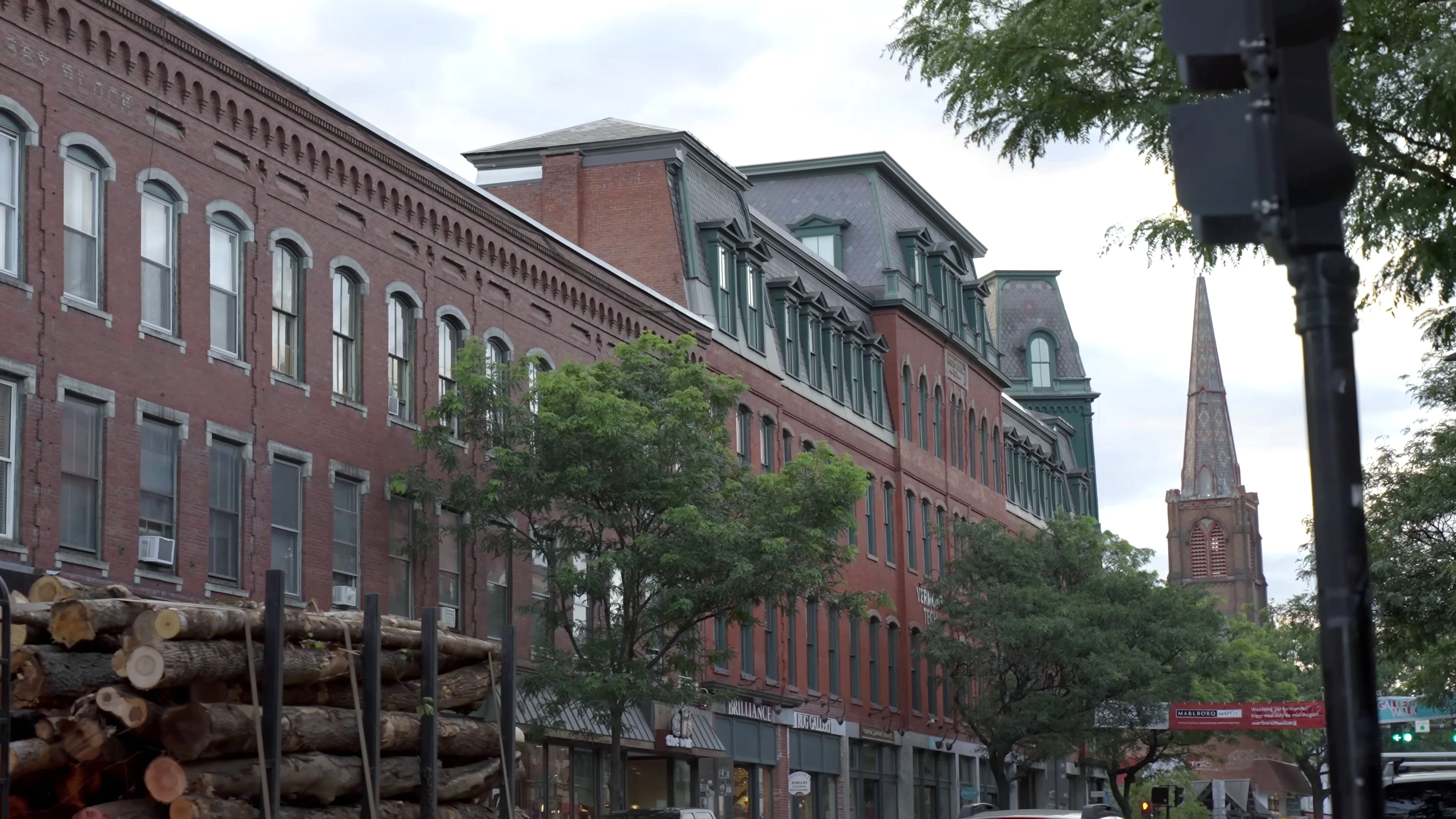
Tall urban buildings that can be adapted to meet changing market needs [Source: Strong Towns]
Housing Crisis & Development Strategy
The Housing Challenge
Despite its many advantages, Brattleboro faces a significant housing shortage that threatens its future viability. Recent surveys revealed a stark gap between housing demand and availability.
"They did a survey and it had shown that there was about a 500 unit difference between what is the demand and what is available. 500 Apartments were needed 2 years ago. 500. And now- and that was I think an extraordinarily conservative number."
This housing shortage affects people across income levels and age groups, from young families to seniors looking to age in place. The challenge is particularly acute because Brattleboro's geographic constraints and commitment to preserving rural character limit where new development can occur.
Infill Development Strategy
Rather than expanding outward into rural areas, Brattleboro is pursuing an infill development strategy that builds on its existing strengths:
- Infrastructure Efficiency: "We can't afford to build new roads, we can't afford to extend our sewer and water but we do have the capacity to build up where our core is"
- Downtown Intensification: Adding housing in and around the downtown core
- Neighbourhood Evolution: Transforming postwar subdivisions to be more like traditional neighbourhoods
- Mixed-Use Integration: Creating developments with a mix of uses and housing types
- Community-Centered Design: Ensuring new development supports rather than undermines community connections
Local Context
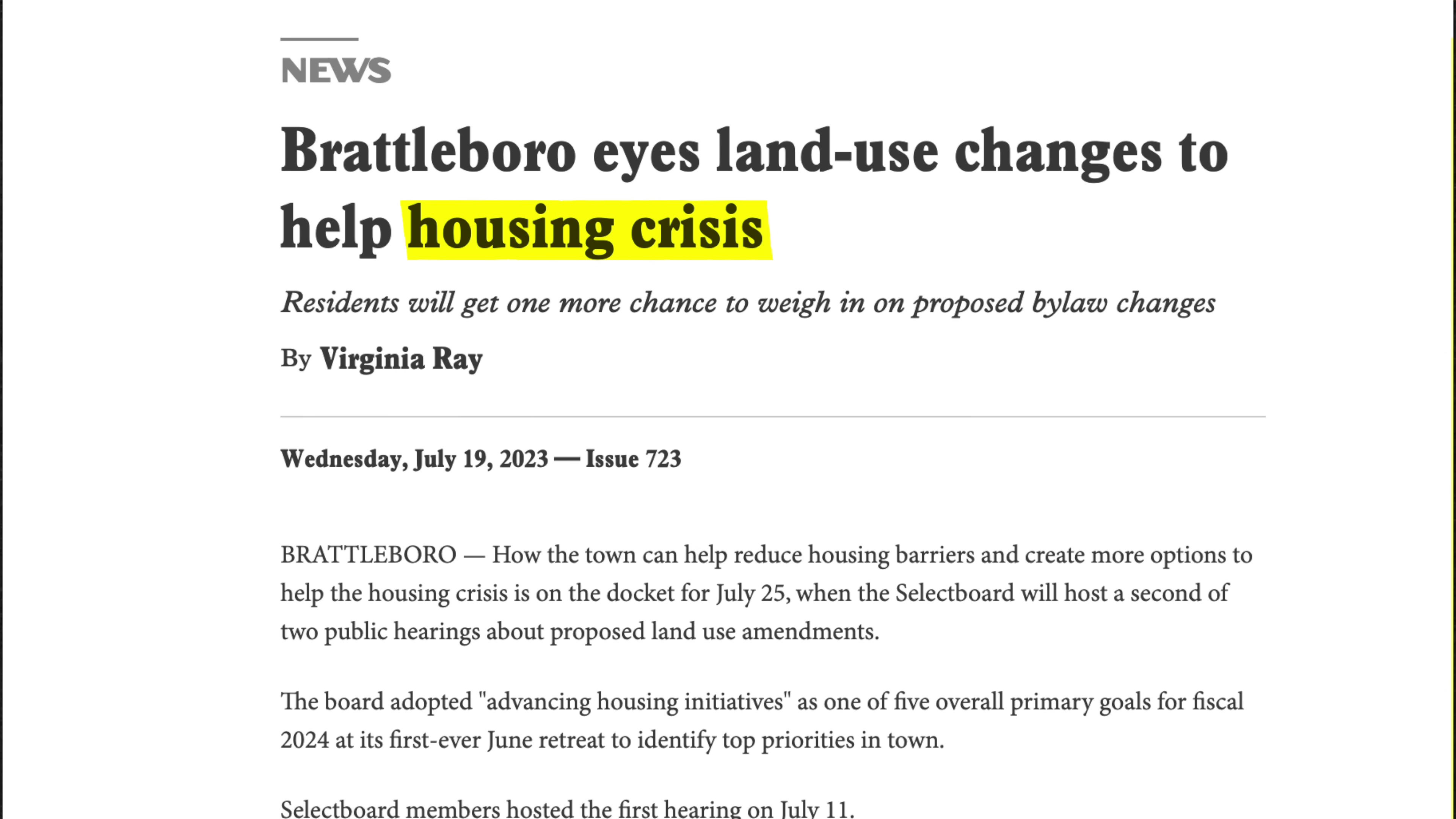
For more detailed reporting on Brattleboro's housing and land use challenges, see coverage in The Commons, a local news source that provides in-depth coverage of development issues.
Development Principles
Brattleboro's approach to addressing housing needs focuses on:
- Building where infrastructure already exists
- Maintaining the character that residents value
- Creating housing options for different income levels
- Supporting rather than undermining community connections
- Preserving access to rural and natural areas
Community Governance & Social Fabric
Representative Town Meeting
Brattleboro operates under a unique form of local government that demonstrates genuine democratic engagement. The town uses a representative town meeting system with about 120 representatives who gather annually to hash out the budget and major policy decisions.
"We sit down in the high school, we hash out our budget, our social service spending. In a good year it comes in at about 14 hours and on a bad year it goes even further."
This system creates genuine civic engagement where residents feel their voices matter. As one resident notes: "One more thing that I love about Brattleboro that feels really important is a sense that our voices matter and not just 'our voices' matter but like ALL voices matter."
Grassroots Engagement
- Direct Access: Citizens can organize meetings with the town manager and select board
- Inclusive Participation: Representatives come from all income levels and backgrounds
- Long-term Commitment: Business owners with 20-40 years of investment in the community
- Transparent Process: Public debates about spending and priorities
Authentic Social Integration
Brattleboro's compact size and mixed-income housing create genuine social integration that would be difficult to achieve in more segregated communities. As one resident explains:
"In my neighbourhood, we have single family homes, we have apartment buildings, we have an emergency shelter for people experiencing homelessness, we have a house that rents to people who are coming out on probation. There's a millionaire just a block away from that- so we're used to living together."
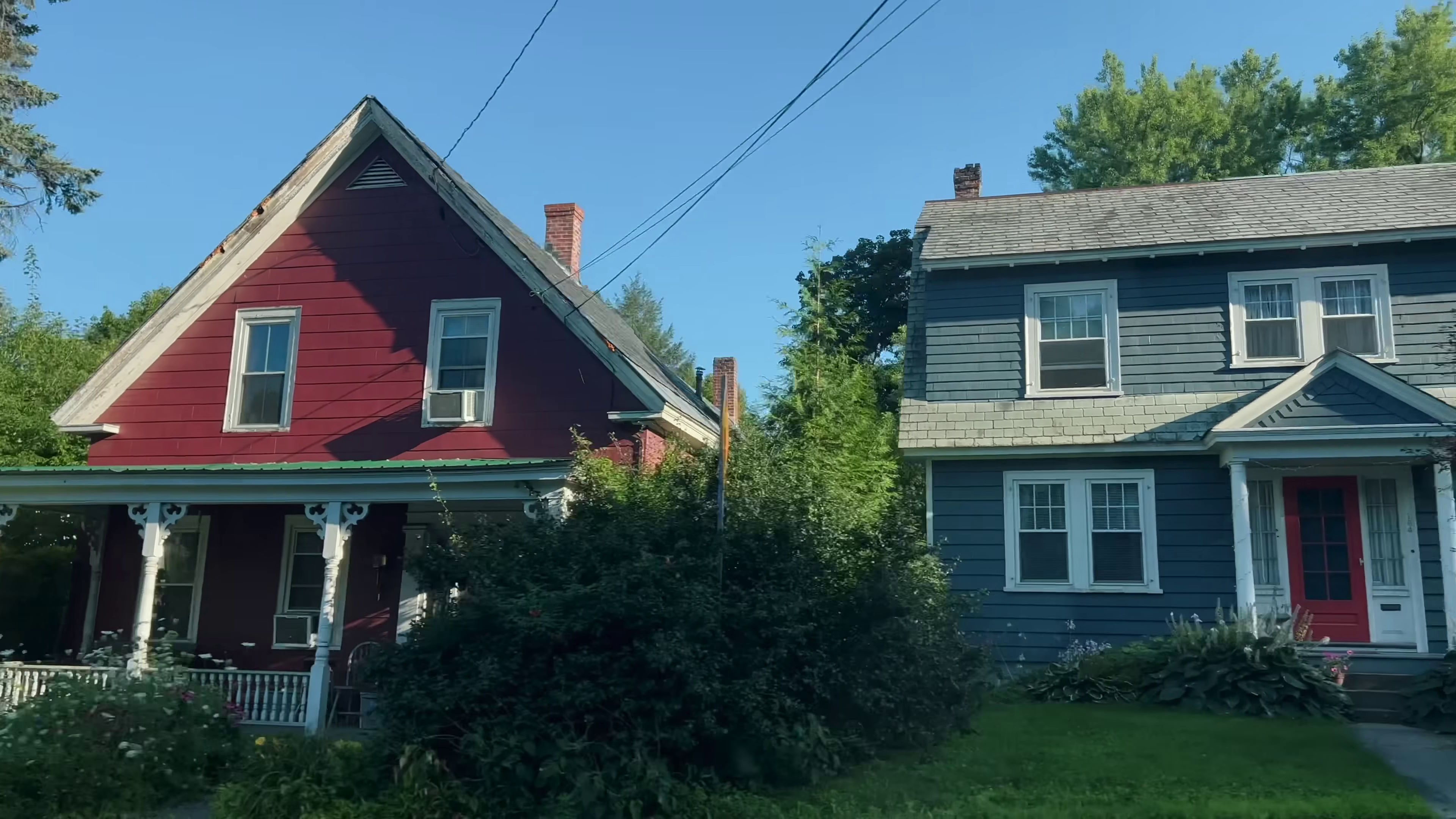
Traditional single-family houses that coexist with other housing types [Source: Strong Towns]
Building Community Through Difference
The town's design forces people to encounter neighbours who are different from them, building stronger community bonds:
- Chance Encounters: "When we're walking down the street, or like in the co-op, we always run into like at least one person that we know"
- "Slow Friendships": Relationships that develop over time between different neighbours
- Inclusive Communities: Strong support for LGBTQ+ residents, people in recovery, and others
- Shared Spaces: Gallery walks, farmers markets, and other events bring people together
Local Food Systems & Rural-Urban Connection
Community Supported Agriculture (CSA)
One of Brattleboro's most distinctive features is its strong connection between urban residents and surrounding farms. This relationship goes far beyond simply buying local food—it creates economic and social bonds that strengthen both the town and rural areas.
"You sign up for a share or a double share or a half share and that represents a certain amount of vegetables that you can go and pick up every week or in the case of some CSA's it gets delivered to a store downtown and just go pick it up right then and there a couple blocks from your house."
This system creates multiple benefits:
- Economic Support: Farmers get guaranteed income early in the season
- Food Security: Residents get reliable access to fresh, local produce
- Community Relationships: Personal connections between producers and consumers
- Cultural Identity: Reinforces Brattleboro's identity as an agricultural community
The Rebop Farm Example
Featured in the Strong Towns video, Rebop Farm demonstrates the deep relationship between Brattleboro's farmers and the community. The farm's approach shows how agriculture can be both economically viable and community-centered.
As the farmer explains: "A big part of it is that, for me, I need downtown to exist for a lot of both, like, the amenities that I want but also for the character of my town... There's like a very complimentary relationship."
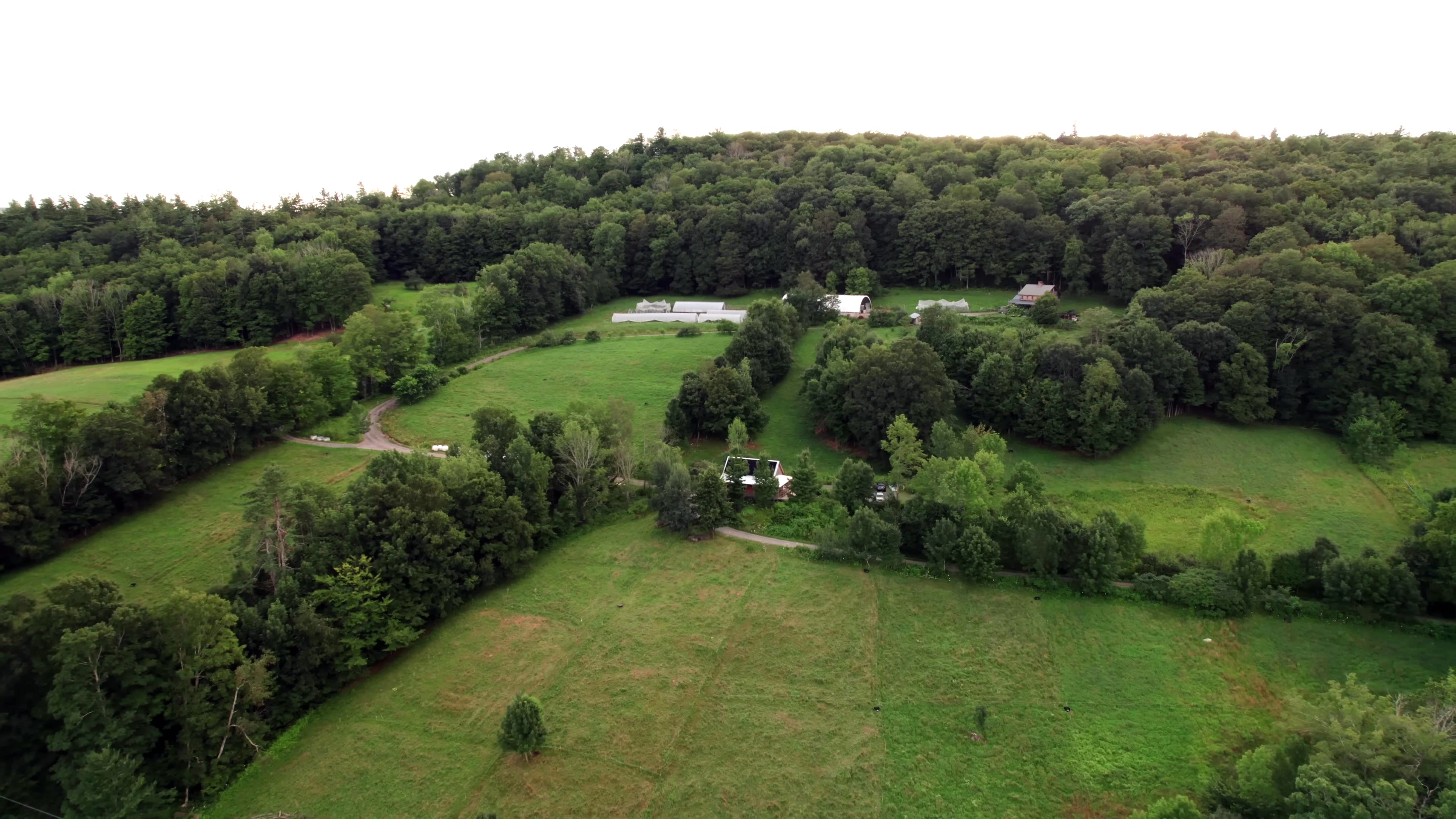
Rebop Farm, one of many small family farms that supply Brattleboro's local food system [Source: Strong Towns]
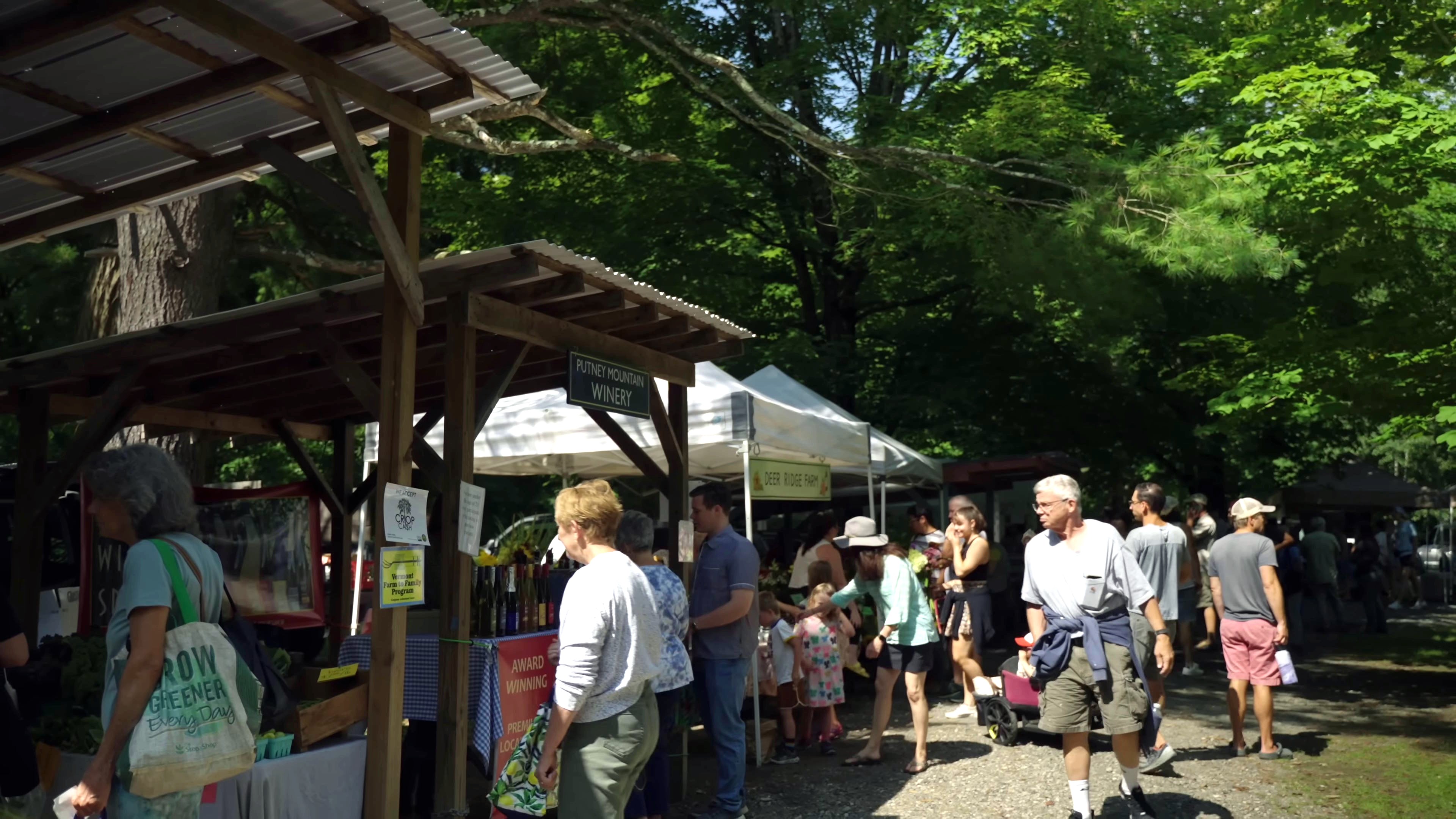
The farmers market serves as a gathering place that strengthens rural-urban connections [Source: Strong Towns]
Mutual Benefits
For Farmers:
- Access to cultural amenities downtown
- Guaranteed market for products
- Community support and recognition
- Informal networks and cooperation
For Town Residents:
- Fresh, seasonal food within walking distance
- Connection to local food systems
- Support for working landscape preservation
- Cultural identity as agricultural community
Why Brattleboro Won
Strong Towns selected Brattleboro as their 2023 Strongest Town not because it's perfect, but because it embodies resilience and determination to improve despite ongoing challenges. As the video concludes:
"Brattleboro won the strongest Town contest, but they're not perfect. They struggle, they argue, sometimes for 14 hours straight- because they love this place. There truly is only one Brattleboro. It's so unique, and it's so special, and so everyone wants it and they're willing to do whatever it takes."
This commitment to place, combined with governance systems that give residents real voice in their community's future, creates the foundation for long-term resilience that Strong Towns seeks to promote.
References & Further Reading
- Strong Towns (2023): This Small Town Is Surprisingly Urban. YouTube video by Mike Pasternock.
Special thanks to Strong Towns and Mike Pasternock for creating the featured video! - Strong Towns: Brattleboro, Vermont - 2023 Strongest Town Contest Winner
- Rebop Farm: @rebopfarmvt on Instagram. Featured farm demonstrating local food system connections.
- The Commons: Local news coverage of land use and housing issues
- Strong Towns: YouTube Channel / Website
About Our Case Studies
These case studies were researched and compiled by James Hansen for the Langley Urbanist Society.
Have a suggestion for a case study we should explore? Know of an interesting example of sustainable, financially resilient urban development?
Email us at contact@langleyurbanistsociety.ca with your ideas.

James Hansen, Society Chair